God and The Reasonable Person Standard

When I worked in healthcare I was told that if I ever made a mistake, especially one that might harm someone, that I would be judged by the “reasonable person standard.” What that means is that a person’s conduct would be evaluated against based on this concept: What would a reasonable person with similar training and experience do in your circumstances? If what you did was in line with what a thinking person with your certification might do, then even if some harm followed you would be cleared. Your decision wouldn’t be considered an act of negligence.
I was recently reading the book American Sketches by Walter Isaacson. In one of the essays he mentioned that Albert Einstein famously remarked to a friend, “When I am judging a theory, I ask myself whether, if I were God, I would have arranged the world in such a way.” We may speculate on the larger context and meaning of the statement. But it made me think about this idea: “If I were God, would I have done it this way?”
The implication here is really applying the form of the reasonable person standard to God. Take 100 other intelligent, wise, compassionate people and ask them how they would have made the world. If their answer is different than what we see, then we must conclude that God is somehow negligent. This is the way we often deal with suffering and evil in the world. It is easy for us to conclude that God got it wrong, because we would have done it different if we were in charge.
Lay people do this all the time to the “experts” and it is now more visible than ever. Social media makes it easy for us to publish our condemnation of coaches, referees, engineers, police officers, surgeons, generals, judges, pilots, etc. With little consequence we can broadcast our “informed opinions” about all these people and their decisions. Of course, few of us fit into the “reasonable person” standard when compared to these people. We don’t have their training. We don’t have their experience. We haven’t had the privilege of their mentors. We don’t know the rules and guidelines of their profession. And we aren’t liable to suffer the consequences of their decisions either. What we do have is a meme, or a 30 second sound bite with which to judge them. Somehow this makes us the standard. And it is laughable how often we are wrong. When the full story is revealed many of the most criticized decisions end up being the right ones.
We also do this to God. We can say with Einstein, “If I were God…” But is there really a more arrogant statement? What we should really say is: “If I knew absolutely everything, including the past and the future… If I could see into people’s motives and heart dispositions… If I was able to perfectly balance the interests of all things in the right proportion… then I would have done things different.” But that isn’t true. You aren’t God and neither am I. You can’t even master 1/100th of all there is to know in any one academic or scientific discipline, let alone all of them.
But God does know it all, and has gracious purposes. He has made this clear in sending Jesus to enter our world and suffer on our behalf. He has withheld nothing from us, no matter the cost. Though his gracious purposes include a world of brokenness and evil, we can trust that if we knew what God knew, we wouldn’t criticize. We would just stand in awe. And one day we will. But he hasn't done it the way we would have done it. But since most of us have trouble balancing our checkbooks and keeping a few resolutions for the New Year, it is more reasonable to trust that the one who framed the all the wonders of the world-great and small-is more qualified than we are. We should stop acting like we are the reasonable person standard for God.

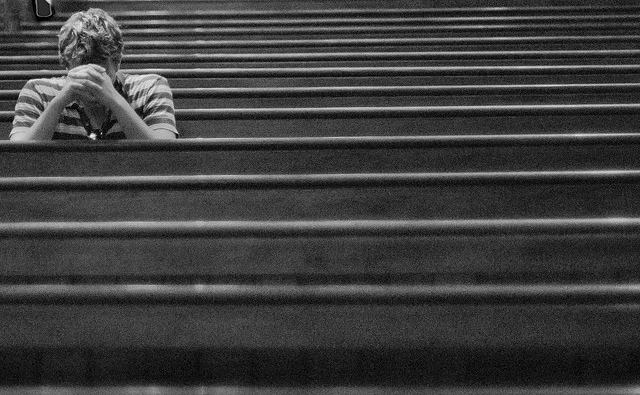
Luther on Matthew 2 & the Magi
"We see here how Christ has three kinds of disciples.
- The priests and scribes, who know the Scripture and teach it to everybody, and do not come up to it themselves.
- Herod, who believes the Scripture, that Christ is now born; and yet goes right against it, trying to prevent what it says from being done.
- The pious Magi, who left country and house and home, and made it their one concern to find Christ."
Quoted in: Broadus, John Albert. Commentary on Matthew. Grand Rapids, MI: Kregel Publications, 1990. Http://www.studylight.org/commentaries/jbm/print.cgi?bk=39&ch=2&vs=1. Studylight.org. Web.
Dare To Be A Sinner… You Actually Already Are!
“Confess your faults one to another” (James 5:16). He who is alone with his sin is utterly alone. It may be that Christians, notwithstanding corporate worship, common prayer, and all their fellowship in service, may still be left to their loneliness. The final break-through to fellowship does not occur, because, though they have fellowship with one another as believers and as devout people, they do not have fellowship as the undevout, as sinners. The pious fellowship permits no one to be a sinner. So everybody must conceal his sin from himself and from the fellowship. We dare not be sinners. Many Christians are unthinkably horrified when a real sinner is suddenly discovered among the righteous. So we remain alone with our sin, living in lies and hypocrisy. The fact is that we are sinners!
"But it is the grace of the Gospel, which is so hard for the pious to understand, that it confronts us with the truth and says: You are a sinner, a great, desperate sinner; now come, as the sinner that you are, to God who loves you. He wants you as you are; He does not want anything from you, a sacrifice, a work; He wants you alone. “My son, give me thine heart” (Prov. 23.26). God has come to you to save the sinner. Be glad! This message is liberation through truth. You can hide nothing from God. The mask you wear before men will do you no good before Him. He wants to see you as you are, He wants to be gracious to you. You do not have to go on lying to yourself and your brothers, as if you were without sin; you can dare to be a sinner...
"In confession the break-through to community takes place. Sin demands to have a man by himself. It withdraws him from the community. The more isolated a person is, the more destructive will be the power of sin over him, and the more deeply he becomes involved in it, the more disastrous is his isolation. Sin wants to remain unknown. It shuns the light. In the darkness of the unexpressed it poisons the whole being of a person. This can happen even in the midst of a pious community. In confession the light of the Gospel breaks into darkness and seclusion of the heart. The sin must be brought into the light. The unexpressed must be openly spoken and acknowledged. All that is secret and hidden is made manifest. It is a hard struggle until the sin is openly admitted. But God breaks the gates of brass and bars of iron (Ps. 107:16).
"Since the confession of sin is made in the presence of a Christian brother, the last stronghold of self-justification is abandoned. The sinner surrenders; he gives up all his evil. He gives his heart to God, and he finds the forgiveness of all his sin in the fellowship of Jesus Christ and his brother.
"The expressed, acknowledged sin has lost all its power."
Dietrich Bonhoeffer, Life Together
Thoughts on Fear While Ministering at the Hacienda
Empathy Not Sympathy
We recently had a time of testimony during a worship service about our outreach at the Hacienda (a recovery home for women coming out of addiction and incarceration). What stood out during this time was the great fear that many described they had to overcome. Following the service, Alice Witt offered some helpful insights on our obvious (and perhaps misplaced) “fears” when dealing with people in recovery from addiction and prison. There is a real danger of pride in thinking that we are "better" than they are. That because our sins are more respectable, we may become proud. And that some of our fear is related to this perception. I asked her to write out some thoughts for us, and with a few edits, they are below. They can help us take another step in learning how to love our neighbors in need.
People in recovery are frequently referred to as “those people.” You know, the scary ones with extra earrings, tattoos, extreme haircuts, and the lingering smell of nicotine. Their “sins” are obvious. The outward manifestations and consequences of their sin are visible to the world. Some of our sins are not so obvious, but the wreckage from all our sins is the same. And so is the price that Jesus had to pay for our redemption. ACTUALLY, I’m one of those people. Daily, I face the consequences of sin in my life.
Recovery really means learning how to live with and grow my scars, patterns of sin, and deepest struggles. “Those people” struggle with shame and trust issues at the core of their being. Trusting anyone could be dangerous. The answer for them is isolation and defensiveness. The antidote for shame is empathy, not sympathy. Empathy brings people together; sympathy can separate them. We may ask, what’s the difference? Actually, the terms are often confused. Empathy says, “Sister, I know. I struggle too.” Sympathy says, “I’m so sorry you struggle with that (inwardly thinking, “I’m so glad that’s not me”). We need to be loved in spite of the sin in our lives. We need to be loved by people who recognize that they too are deeply involved in heinous sin. All of us are “icky” and “messy."
When I think of working in recovery ministry I often feel self conscious because one of us is an outsider…probably me. The feeling is awkward because I wonder what I have to offer. If I have empathy, then what I may have to offer is a sense of hope. Hope because Jesus took my sin at the cross and He uses trials and temptations to make me more like Him. There is a real risk that we will be rejected by people in recovery if we bring the mentality of “doing good in the hood”. By this I mean doing anything that may make me feel good about myself because I helped out the heathen. We shouldn’t feel sorry for people we are trying to bring the message of hope to because feeling sorry causes shame. Unconsciously, this attitude can creep in when I think of ministering TO others. My efforts will be met with scorn if I somehow convey that my sin is not so bad as theirs. This is a ministry “with”, not ministry “to” people as we recognize our similarities not our differences… “brother I know. I’ve been divorced, drink too much, spend too much, use sarcasm, have had dishonest business dealings, cheat on my taxes, lie, steal, cheat, even Murder (there’s a new law in the land…).” In this ministry with our “brothers and sisters” in this brokenness, we must show them that we love them as they are, that we are no better than they are, and share with them the hope we have found in Jesus.
A number of years ago The Well Community Church found that when providing Christmas gifts for families who could not afford to buy Christmas gifts for their families, the father’s were conspicuously absent at the time of delivery. Inquiries led to the discovery that the fathers were feeling shame because they were not the ones providing gifts for their families. In subsequent years, church members continued to buy gifts but instead of delivering the gifts to the homes of each family, they used those gifts to stock their thrift store. Families were then invited to shop at the thrift store. Instead of avoiding the distribution of gifts, the father’s came and did the shopping. Instead of shame, they felt empowered as the providers for their families. Hope was instilled and shame healed.
Ministry to people in recovery must exude the attitude that we are each “one of those people.” I promise to love you in spite of your hurts, habits, and hang-ups. Will you love me, too, in spite of mine?